
Being organized has always been a part of who I am, for better or for worse. Since college, I have become increasingly interested in / fascinated by / borderline obsessed with productivity. I am always thinking about how to be efficient and effective, and it boils down to how I spend my time. In this post, I will share what I call “my productivity journey“ and the learnings I have had along the way. I will also share my current process.
“Being busy is a form of laziness – lazy thinking and indiscriminate action. Being overwhelmed is often as unproductive as doing nothing, and is far more unpleasant. Being selective – doing less – is the path of the productive. Focus on the important few and ignore the rest.” – Tim Ferriss
Going to college was my first experience with massive amounts of unstructured time, as a semi-adult who was able to make her own choices. From the rigor of being a student at Georgia Tech, to being a self proclaimed “overachiever“, the source of my desire to be incredibly productive and get everything stuff done yesterday is unknown. While it’s true, it might be “how I am wired”, I have had my ups and downs – there have been times that I feel so accomplished and validated after getting a ton of work done, and there have been other times where not completing my to do list has left me overwhelmed and unmotivated. The analyst in me wondered if there were any patterns in my behavior that I could uncover.
Identifying patterns
Earlier this year, I was frustrated because I felt like a hamster on a hamster wheel, except my wheel was different seasons of life. I remember shaking my head and thinking to myself “I am right where I was eight months ago.” My husband, whom I jokingly call my “in house therapist“, suggested that I flip through my past journals and see what I stuck out to me.
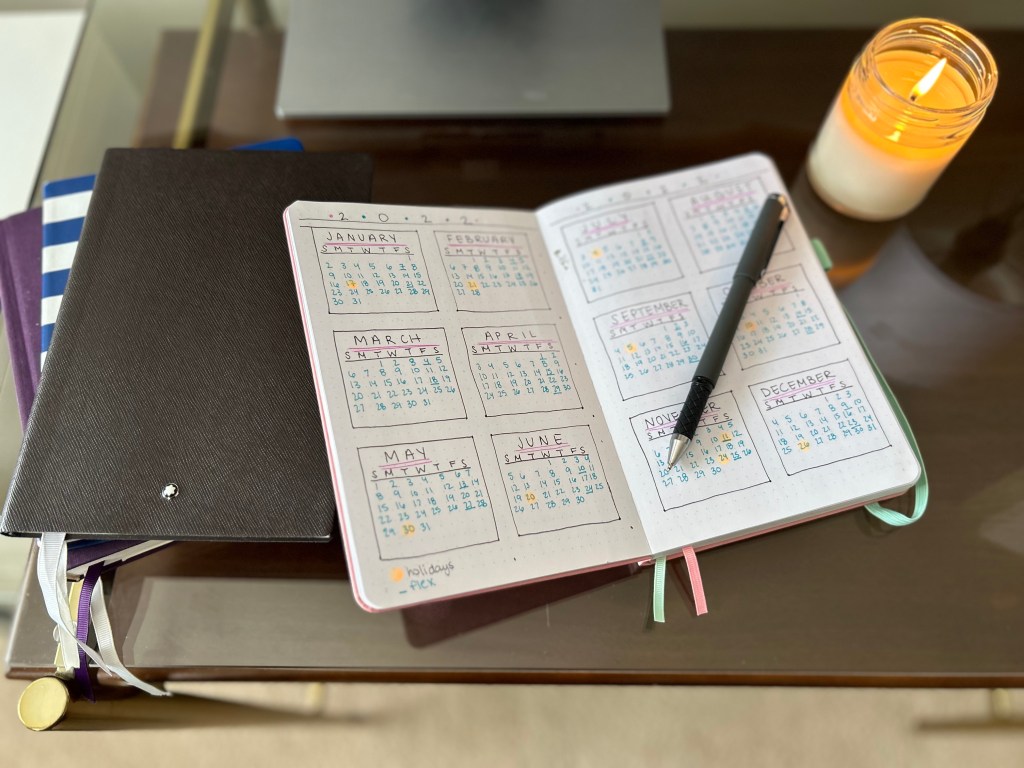
I began to be somewhat consistent with ”journaling” in 2018. I saw “journaling” in quotes because it is usually a mix of planning and capturing my thoughts, like a planner–journal hybrid. Anyway, I spent time flipping through every single page of every single journal. I took note of dates and topics that I previously wrote about, the kind of planning system I was using, and themes about my feelings based on my comments.
My seasons of life
One of my key findings had to do with my “seasons of life”, or the hamster wheel I felt like I was stuck on. My seasons of life are not bound by the calendar, but rather are bound by the perceived amount of free time that I have. During periods where life feels lighter, I spend more time thinking and ultimately coming up with a (sometimes fun) project for myself. It might be a project at the house, or wanting to create a new habit. I get excited and generally have a lot of momentum, but eventually life happens and something changes. A new assignment at work, and important task I need to take care of, or any slew of unforeseen things that life throws at me. Typically, what happens next is I do not recalibrate when my time is no longer as available as it was and I become immensely overwhelmed, frustrated, and after too long, burnt out. My go to “overwhelmed response“ is to buy a new planner or create a new planning process.
Maybe I was working off of a master to do list and cherry picking items every day to get my work done. “Now I feel overwhelmed, so my system must be the issue”, I say to myself. Then I may go to a monthly planning process where I identify all the tasks I want to do in a month, then break it out by priorities for the week, and then by the day. “This will surely solve all of my issues!“ – Can you sense the sarcasm? Joking aside, I think this thought process (the system is the issue) came from my overwhelmed headspace, rather than stepping back and taking a bigger picture look at why I was overwhelmed. I will expand on this more later.
Understanding how I set goals
The other valuable take away from reviewing my past journals related to the types of goals I set for myself as well as how many goals I was setting at any given time. I am equally a “start on your goals now” type of person as much as I get the new year hype. I typically sit down and set goals for the coming year each December. For the past four years, I have had a lengthy list of goals based on key areas of my life – personal, professional, health, and other. What I was frustrated by was how similar many of my goals seemed from one year to the next. I also felt as though I didn’t achieve most of my goals each year, which was another frustration. Wanting to better understand why this happened, I spent a fair amount of time reflecting.
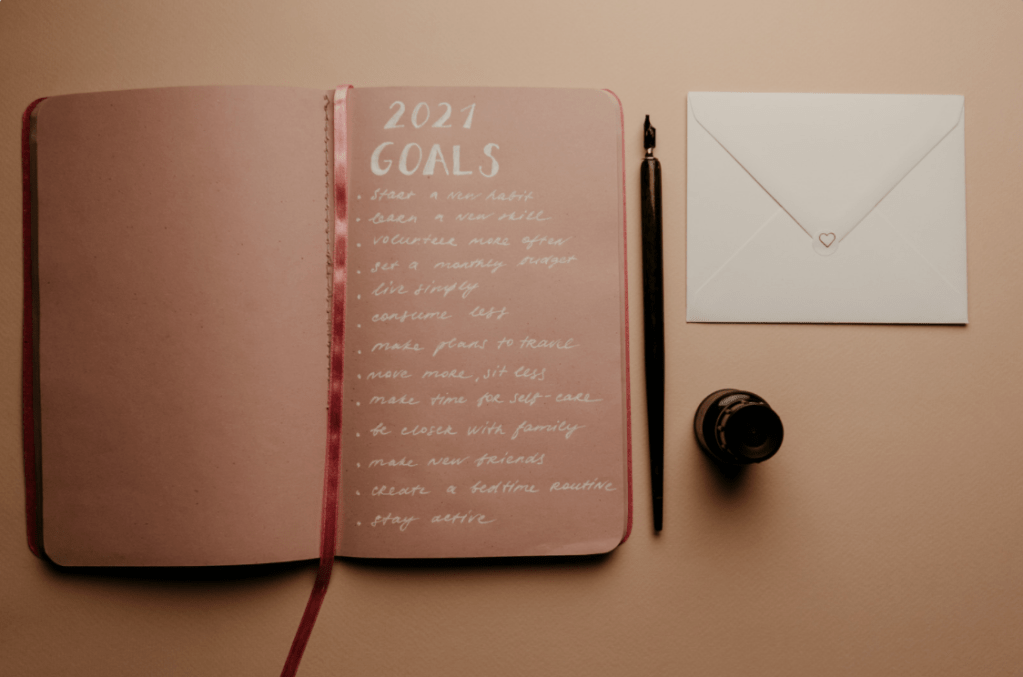
I recently stumbled upon a few articles where people were reviewing their 2023 goals and outlining their goals for the new year. Historically, it has been hit or miss for me to do a year-end review and assess the progress I made toward my goals, which made part of this personal reflection project a little challenging. One thing that, frankly, blew my mind was the number of goals these people had for the year. It was a fraction of the number of goals that I was striving for. Now, I am not commenting on how many goals is an appropriate number of goals for a year, but my personal assessment is that I had too many to truly give my focus to.
What’s most important
As part of the strategy work I have done, one of the biggest concepts that I push my teams toward has been to set clear priorities that (hopefully) dictate how we spend our time, based upon what truly moves the needle for our team or business. But there was a disconnect with how I was “running” my personal life. There is a quote that says “If everything is a priority, then nothing is a priority“. We all have the same number of hours in a day to take care of whatever it is that we have to and want to get done. There is another quote I love – “You can have it all, but not at the same time/right now.“ Both quotes get at the same idea– if you truly want to make something happen, you have to dedicate sufficient space, energy, and effort to reach that goal. This cannot be done if we try to follow every idea, task, etc. that pops into our mind or comes our way. This is a key finding that I will expand upon more when I share what I am currently doing.
Leveraging my values
Even bigger than the goals themselves are the personal values that sit beneath them. I have researched and personally experimented with value-based goals, which are goals that directly stem from the personal values you hold. For example, I highly value living a healthful life – physically, mentally, and emotionally. I always set physical fitness goals for myself, as well as goals that will support my mental well-being, such as making sure I spend time disconnecting from my work (because I can become very engrossed when I am excited about a project). Since these goals are based in a core value, it helps me continue to make progress, even when it feels challenging to do so.
As much as I love planning, the third thing that is really important to remember is the execution of your plans. I have found myself spending more time planning than doing – hello analysis paralysis. It’s in the execution I will learn. I might learn this task isn’t as daunting, or won’t take as long as I initially thought. I might discover this project is not at all what I thought it would be and I can more quickly revise my approach. I might uncover that this creative project I wanted to explore is actually a newly discovered passion that I want to make more time for in my life.
In this final section, I will share how I take these learnings of what’s most important and apply them to what I am doing now.
How I stay on track
Setting goals ultimately comes from the dreams that you have for yourself and your life. Goals, should you decide to formalize them or not, can be a catalyst for growth and transformation. But the goals themselves don’t get you there, you do.
In understanding my seasons of life and my tendency to always fill my time, I am making recalibration a big part of my process. I reassess both my availability to put effort into something and it’s alignment to my ultimate goals and personal values. Life is never linear, no matter how much I would like that to be the case or how much I try to control it.
I have sat down and reevaluated my values, adding or subtracting based on where I currently am. I also made a list of my top personal priorities, and include them in my journal so they are always top of mind. Even though I know what they are, I can get distracted and lose focus sometimes on what is most important to me.
Applying my learnings
Tactically, I reference this list each month when I set a few month-specific goals and think about how they connect to my bigger picture. I set aside time each week to realign myself with my priorities and my monthly goals to determine my key tasks for the week. I occasionally throw on additional tasks that are on my mind that I can do if I have leftover time. Lastly, each day I write down one thing I want to remember from the day as well as one thing I either learned or accomplished that I am particularly proud of. Sometimes things come up or I get sidetracked, but this all allows me to see that I am still getting things done and tracking what counts the most to me.
On a deeper level, my productivity journey has stemmed from how I see my own worth. As I noted at the beginning, there was no defining moment where this became truly apparent to me or an event that made me view myself differently. I hope this article helps you in someway, and for those who may view their value by the number of checkmarks on your to do list, please consider adding space for personal reflection to that list and see what happens.
 Lauren Terschan