
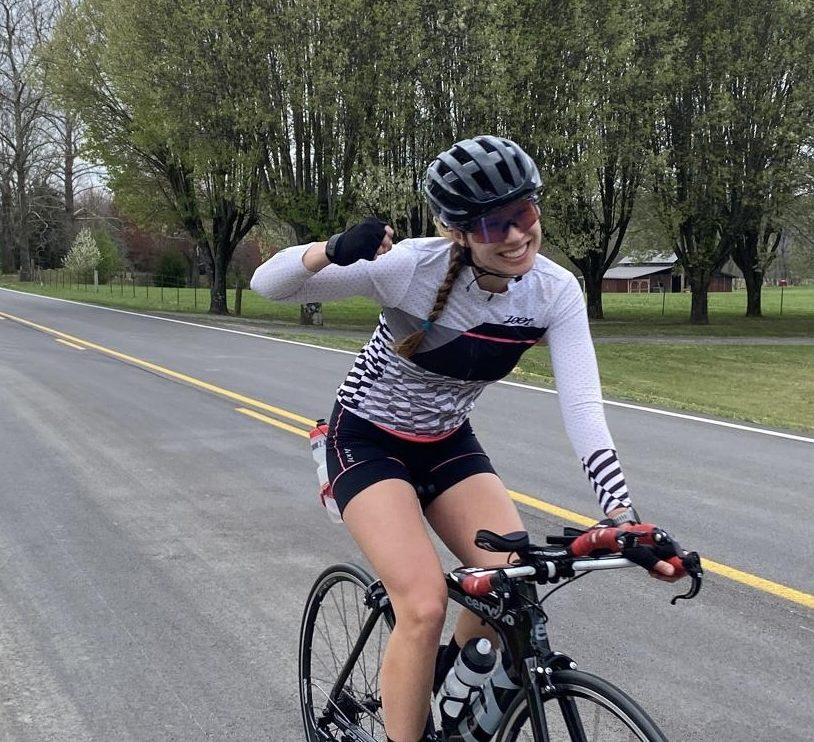
Over the years, I’ve raced many different kinds of events in different sports and there’s always something to learn from those experiences. These learnings and takeaways are nuggets of knowledge I wish I could tell my younger self (especially key takeaway number one). Here are six takeaways I’ve learned over my triathlon journey so far, many of which are applicable to any kind of race you may pursue.
Takeaway #1 – Do a race debrief to extract the value of your experience
My race debrief starts with taking time to reflect on how my race went and writing it all down in my journal. I typically walk through the event, how I felt, what happened, etc. I’ll also include details about where the race was (which is helpful if I ever want to do the race again), who was there (family, friends, fellow racers), and the weather to fully set the scene.
Then I jot down my wins, big and small. I’ll touch on my performance in the race, especially outside of the overall result. I’ll often set mini goals within the race (which i’ll expand on below) or notice things I did really well, like keeping a positive attitude if things didn’t go as planned (which, bonus takeaway, it hardly goes to plan). No matter the race, there’s usually a handful of wins I can highlight.
Lastly, I go through my opportunities for future races. Sometimes it’s specific to that race distance, other times it might be a shift in racing strategy or something I want to work to improve more broadly. The really important thing I have to remember after I do all this writing is to REVIEW it again in the future, ideally before a new training block or the week before a race to keep the learnings top of mind (if they’re forgotten, they aren’t helping me).
Takeaway #2 – Weather is unpredictable and it can very much impact your race
You will never truly know what the weather will be on race day. Period. Even if it’s always been the same weather for the past twenty years at the race, it might not be that way on your race day. So you need to be ready. To be ready, you can:
SAFELY train in different conditions (heat, wind, rain but really only for the run)
I never swim outdoors in bad weather and don’t intentionally ride in the rain (if there’s a pop up, I get through it safely; in the cases we are trying to get in a ride before the rain comes, we seem to always get caught in it lol!)
Get ready by building your mental fortitude
Tough training sessions (whatever tough means for you) that challenge your ability to complete the interval, workout, etc. will sharpen your mind for what you may face come race day. I’ve found immense value in recalling tough training workouts when I’m facing a challenge DURING the race. “I can handle this, I’ve done this before” is a powerful tool to have.
Rain, wind, heat, cold – there’s only so much you can (and should) prepare for. You may experience conditions on race day that you can’t simulate. In that case, trust yourself and your training and navigate the day how it comes (honestly, this applies to more than just the weather 🙃).
Takeaway #3 – Visualize your race and practice your transitions
The shorter the race, the more your transitions matter because fast transitions = free speed. I practiced transitions more often when I first started triathlons, but I always practice my transitions before race day.
I setup my “transition” in my garage with all my gear. I visualize each key part of the race (from jumping in the water to each transition, imagining myself hitting my goals throughout the race and keeping a level head, to crossing the finish line) and run through the transitions when I get to that part of the race in my head. Obviously, there’s no need to visualize the entire race (no one has that kind of time), but covering the highlights is really helpful.
I used to visualize my entire swimming race when I was younger. Coach would give everyone a stopwatch, we’d close our eyes, and he’d say “take your mark, go!” We’d start the stopwatch and envision our key race. On a race that was only about 60 seconds long, I could visualize it within a few seconds of how I actually performed. There’s a lot of power in seeing yourself do something, and then doing it (I’m pretty sure it’s called “manifesting” now 🧘🏼♀️).
Anyway, practicing transitions a few days before the race sharpens my skills and allows me to do a gear check before packing everything up!
Takeaway #4 – Give yourself more opportunities by having more “mini goals” within your race
“Mini goals”, as I like to call them, are a cool way to engage your mind and your efforts throughout a race, without being so locked in on the overall result.
They can be applied to any race distance and any part of your race. They may be performance based, such as maintaining a pace on the run, or they may be execution based, like swimming the most effective line by sighting frequently or not pushing the uphills on the bike as hard as humanly possible so your legs aren’t completely gone for the run – this has personally been one of my goals following some painful run experiences lol.
Following your race, when you do your race debrief with yourself (see take away number one), you will have more opportunities to find wins from your day, and therefore bolster your confidence in what you accomplished. We all love to see we are making progress, and the more goals we have within a race, the more opportunities we have to let ourselves succeed. Especially since there is so much opportunity for things to not go as planned.
Takeaway #5 – Learn your nutrition baseline and scale
You may have heard the joke that nutrition is the “fourth discipline” in triathlon. I am here to confirm that it is, in fact, very important. To learn your baseline, you can test different types of nutrition (water, mixes, gels, solid foods, etc.) during training to determine what gives you fuel and agrees with your stomach.
In addition, you can do things like sweat tests to learn how much liquid and sodium you lose, which will help you dial in how to replenish it. The longer the race, the more you’ll need to have with you. So once you have the basics that work FOR YOU dialed in, you can scale it for whatever you’re pursuing.
Takeaway #6 – No rules to progressing in triathlon (or other sports)!
While I’ll agree there is some logic to starting your triathlon journey with the shortest distance race (a sprint triathlon), I have MANY friends who started with one of the other distances as their introduction to triathlon racing. I’ve heard others say they aren’t going to extend to an Olympic distance triathlon until they feel really comfortable with the sprint distance.
Personally, I did a sprint triathlon and a year later did my first half Ironman, then two years later did another half Ironman, then did an Olympic… there’s no “right” number of races to do in a year (or that you even have to race multiple years in a row), no “right” order to try different race distances, no “right” anything! The same thing goes for other sports and events! If you’ve never run a 5k and train and your first running race is a 10k, then that’s great! Explore, follow your heart, and have fun!
Going forward
I encourage you to reflect on other takeaways you have from your experiences and share them in the comments below! There are so many opportunities to learn every day – let’s continue to keep our eyes open for them so we can keep growing together!
 Lauren Terschan
Leave a comment